Monday, December 12, 2011

Lesson Plan for Hamlet Research

Hey Guys, I forgot to post this lesson plan for the curriculum to the blog. This is the first lesson, the research of the whole play one.


Hamlet Research Lesson Plan

Learning Outcomes:

To have students read Hamlet and process it by responding creatively to each of the acts by:
1.       Creating a summarizing work of art for each act
2.       Creating a final summarizing work for the whole play.
3.       Compile the works of the entire class and present it in a local or school art gallery for the viewing of others.

Materials:
  • Hamlet: The play
  • Artistic mediums of any kind
    • Paint
    • Pencils
    • Markers
    • Clay
  • Film Productions of Hamlet


Procedures:

Introduction
There are about 32,065 words in the masterpiece Hamlet. The play itself is meant to be seen visually, usually as a play production, it was not meant to be just read. It has been said that a picture is worth a thousand words and so students will represent the words of the play Hamlet, visually as it was meant to be presented.  However their visual representation will not be a moving living play, but a snapshot of time, or summarizing picture that truly captures a thousand words of the theme and content found in this wonderfully written play.

Backround
Hamlet is a tragedy. What is a tragedy?
  • Dramatic composition, often in verse, dealing with a seriousor somber theme, typically that of a great person destinedthrough a flaw of character or conflict with some over powering force, as fate or society, to downfall or destruction.
  • Hamlet is more than just a tragedy, it is a revenge tragedy which usually had some things that went along with it in Elizabethan times; Melancholy hero / avenger, a villain, complex plot, murder, play within a play, madness (real or fake).


There are many themes of death and revenge in Hamlet:
  • Hamlet vows to avenge his father’s death at the hands of Claudius.
  • Laertes vows to avenge his father’s (Polonius) death at the hands of
  • Hamlet.
  • Young Fortinbras vows to avenge his father’s death at the hands of Old King Hamlet.
  • Pyrrhus kills Priam, whose son killed his (Pyrrhus’) father [from the play
  • within the play scene.


When and where does the play take place?
  • In Denmark on the verge of a war about 1200 A.D. although the characters do reference things from Shakespeare’s day.


Reading the Play
  • Have the students read the play act by act. As they do so discuss themes with them that they discover through the reading process. Help them in their discussions see the themes found in the five lesson plans that follow afterward as well as come up with themes of their own.
  • As you use the five lessons plans that follow to cover the material of the play and specific themes take a few moments in each class to talk about the themes students discover through the reading process.
  • Encourage critical thinking and discussion between students about the play and also how they can represent discovered themes or motifs that stand out in a visual form.
  • If there is time in class have the students separate after their discussions and work on the ideas they have been developing one with another


Assessment:

Students will be graded on their understanding of the play by their ability to support the themes they found, along with the support and connections they can draw from their created works of art.

Thursday, December 8, 2011

Acts IV and V

 Act IV:

"O, this is the poison of deep grief; it springs
All from her father's death. O Gertrude, Gertrude,
When sorrows come, they come not single spies
But in battalions. First, her father slain:
Next, your son gone; and he most violent author
Of his own just remove: the people muddied,
Thick and unwholesome in their thoughts and whispers,
For good Polonius' death; and we have done but greenly,
In hugger-mugger to inter him: poor Ophelia
Divided from herself and her fair judgment"
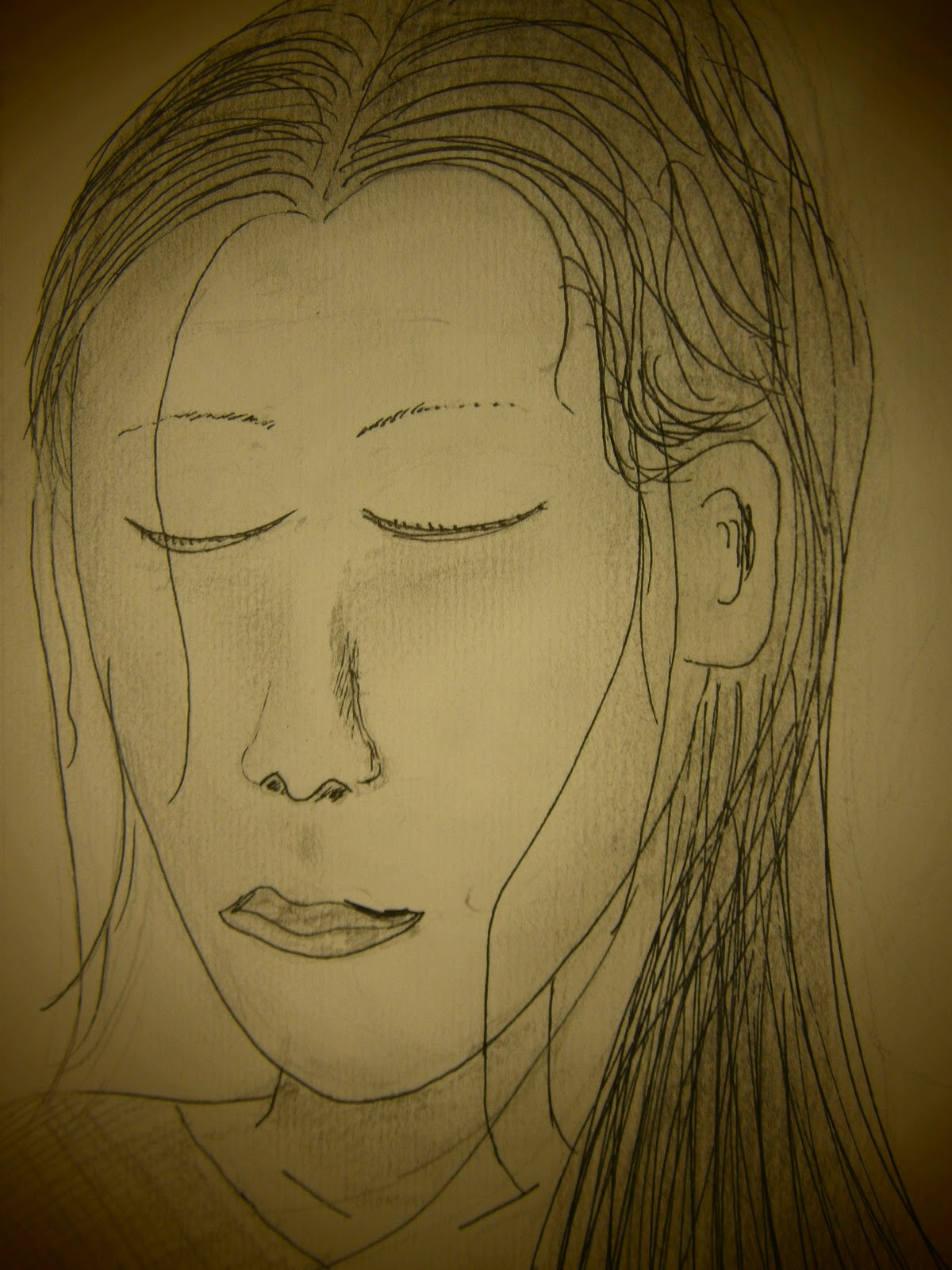
Act V: After so much tension, everything simply seems to explode, rupture, fall apart, etc. There is not consolation, there seems to be no reason that is legitimate to suggest why everybody died, and cathartic grief takes over. This is what I tried to capture with these two pieces.


YouTube and Other Videos

Our introductory video is now up and running on YouTube!


While I was uploading our video, I came across some other videos about teaching Shakespeare as well as art and Shakespeare, and I thought this one was interesting because it was sort of like ours (trying to get people to go to another website in order to learn more)

Through watching this video I was directed to a Folger Shakespeare website that has lesson plans for the plays, as well as other online resources such as videos, explanations, podcasts, etc.

We are definitely joining with the ranks of some pretty prominent people (even PBS documentary worthy teachers) and I hope that people will be able to not only use the information that we have worked so hard on, but also expand on and be inspired by what we have done.

Wednesday, December 7, 2011

Deviating Globally

Our gallery of art now exists in two places at once. How you might ask? Well, here on our blog we have all of our works of art, and also on Deviantart.com with our cool new account. It took quite a while to upload all of the pictures to the website but it is worth it.

We had not had our pictures up for five minutes before we got feedback that three or so of the pictures were already posted to other peoples "favorite" wall. Talk about an ego booster.

Tuesday, December 6, 2011

Act III sketches (Erik)


 Since I decided to use the organ/flute piece as my major piece (since it took a good chunk of time to do), I am going back to do a different series of sketches for act III.

This first photo I owe to my camera, I didn't actually draw this. It is a live collage, and I used this particular format to capture the effect of all the things in life that contribute to our considering of what we want to do, what we want to 'be'. "To be, or not to be, that is the question". Especially in college, there are many factors that go in to that: Do I want to go into education, business (with money!!!!), how do I balance everything, do I really need to work out, whoops, I forgot to do my Home Teaching (fulfill church responsibilities), etc. With so much screaming for our attention, we often ask: "Who are we", and so did Shakespeare's Hamlet.


 In these abstract paintings, I wanted to follow up with my previous themes of madness, on the one hand light, on the other hand darker, all the while being conflicted. "To die, to sleep..." or to keep on living.

Saturday, December 3, 2011

Art Response: Following the Plan

this is my art that was generated by following Cassandra's Lesson Plan on indecision. I found it very intriguing and actually a lot of fun to just go crazy with what the assignment was. I feel like the end product really does show indecision because I can't tell what it wants to be. There isn't really anything linking it all together. The process was this: choose random numbers (within the range of 1-20) and do the technique associated with that number (as specified in the lesson). Only fifteen minutes are allowed for each process. I found it easier to create random images and random art from this predetermined list of processes that I had to do. So while making the art I was never at a loss for what to do or how to make it, I just did it.
The funnest part was probably when me and a friend went out to the nearby creek to get our shoes dirty so I could actually make marks by stepping on the art (i didn't want to use paint;). Thanks Cassandra for a really fun way to make art. I had so much fun I made two! (and I'll probably do it again!)

Thursday, December 1, 2011

Shakespeare Art Video!


Here is the video that we started creating earlier today. I made it run smoothly, as well as added some background music and images, and I feel like it introduces our ideas well. If there are any suggestions as to how to improve it (on the condition that I have the capabilities to change it), please let me know! The sooner we get this posted on YouTube or other social media sites, the better! Below is the script for the video. I thought it would be nice to include all of our hard work.

When introducing Shakespeare into the classroom, it can sometimes seem daunting to both students and teachers alike. So, we created a series of lesson plans to help students better connect with Shakespeare.
In order to achieve this, art is used to connect students’ personal experiences and views to that of themes found within Shakespeare’s plays. The students are asked to respond creatively to Shakespeare to help them better process his plays. The play that we chose to do was Hamlet, because of its common use in high school classrooms.
In our lesson plans, we have broken the play down into different themes that students would have prior knowledge of and be able to connect with, to make it easier for the students to learn about Hamlet.

For example, one of our lesson plans involves the theme of indecision. To begin this lesson, thought provoking questions are derived from the text, such as ‘What do you think of Hamlet’s words “May my thoughts be bloody?”’ and “When can indecision have a positive or a negative effect?”. This will encourage the students to think critically about this theme.

After the discussion, the students are challenged to apply the theme of indecision through a specific art-making process.This solidifies the students’ connection between Shakespeare’s writings and their own lives.

To test these lesson plans we created examples of artwork that would be created in an actual application of the lesson. These examples as well as the correlating curriculum can be found on our blog shakespeareart.blogspot.com as well as on connexions, or cnx.org